Other Views on Free Will
A reading list of recent books on free will and determinism, with my take on how each one relates to The Science of Free Will.
Determined: A Science of Life without Free Will — Robert M. Sapolsky
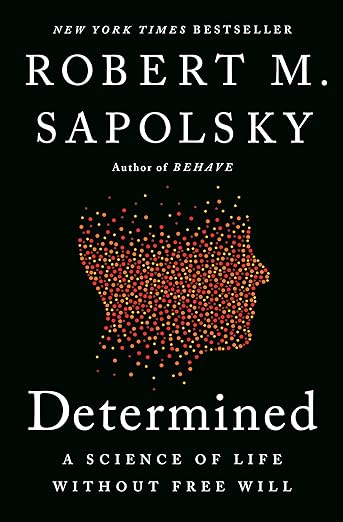
Sapolsky challenges the traditional notion of free will through a detailed examination of how biology, particularly neuroscience, dictates our decisions and behaviors. He delves into how our genes, brain chemistry, and environments interact in complex ways that predetermine our actions, leaving little room for free will as traditionally understood. The book presents a compelling argument that our choices are influenced by factors beyond our conscious control, ranging from genetic predispositions to the impacts of stress and hormones. He uses a combination of scientific evidence and accessible storytelling to explore the implications for understanding human behavior, morality, and the justice system.
In The Science of Free Will, I explore the same question from a perspective that spans a wider range of disciplines. Despite the deterministic framework of the universe, I argue for the existence of Free Will in Practice due to the complexity and unpredictability inherent in human decision-making within the constraints set by physical laws. Sapolsky focuses on the evidence from neuroscience and biology that underscores the constraints on our autonomy, advocating for free will as an illusion shaped by unrecognized determinants of behavior. I, while acknowledging the deterministic nature of physical laws, propose a nuanced understanding that reconciles determinism with the practical experience of free will. The unpredictability and complexity inherent in human decision-making allow for a form of free will that is significant and meaningful in our daily lives.
Free Will — Sam Harris
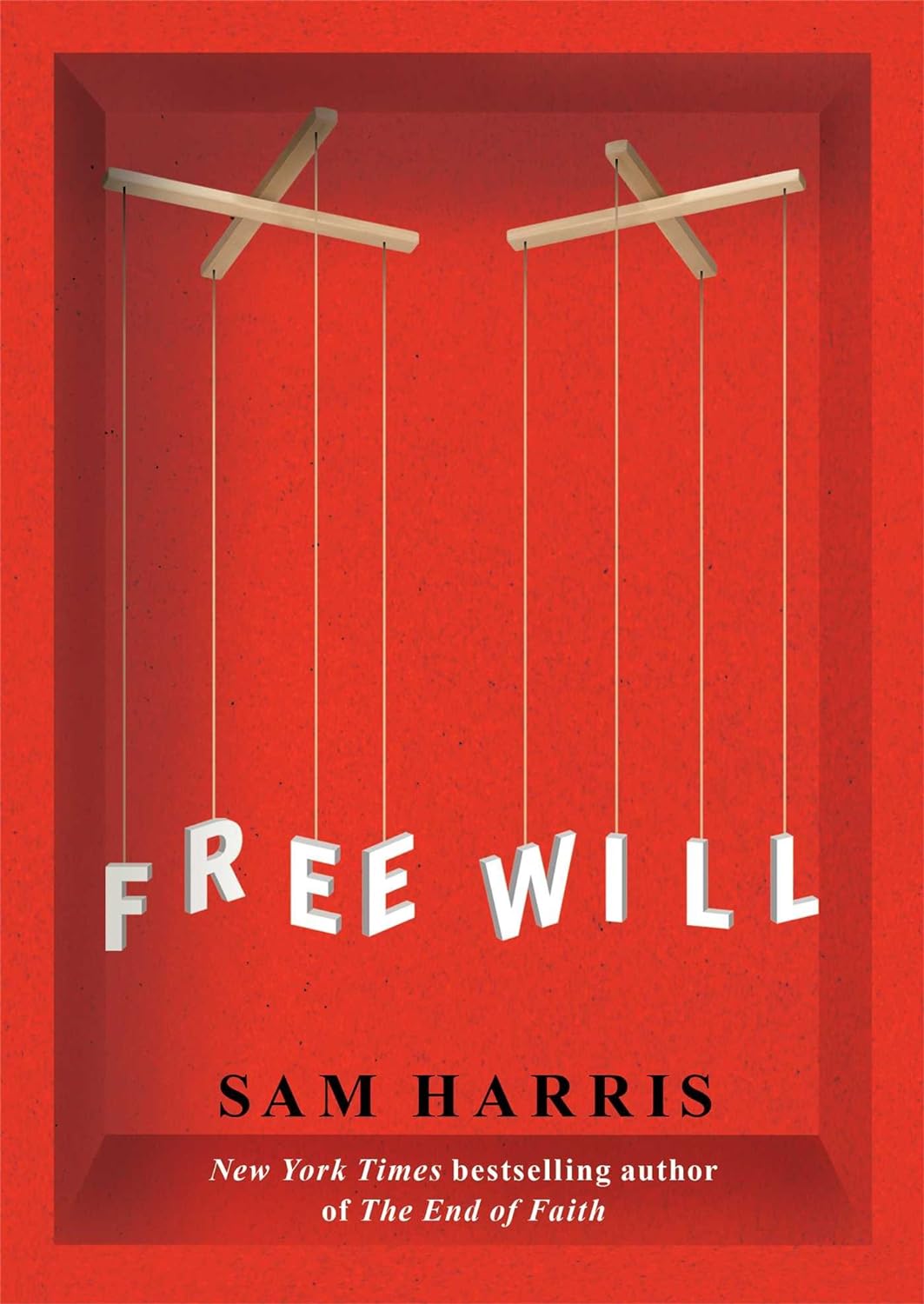
Harris argues that free will is an illusion, contending that our thoughts, intentions, and actions are all determined by prior causes. According to him, our sense of agency is nothing more than a mental construct, a byproduct of brain states and environmental influences that are far beyond our control. He draws heavily on neuroscience and psychology to make the case that the idea of free will is a myth, one that crumbles under the scrutiny of scientific evidence.
I also acknowledge the deterministic nature of the universe — particularly through the lens of quantum mechanics and physics. But I introduce the concept of Free Will in Practice (FWIP), which differentiates between free will in theory (FWIT) and the practical experience of free will. While I agree with Harris that the fundamental particles that compose us follow deterministic laws, I argue that the complexity of human actions leads to an unpredictability that can be perceived as free will in our everyday lives. Harris sees the deterministic nature of the universe as undermining concepts like moral responsibility and agency, leading to a more fatalistic view of human behavior. I present a more optimistic perspective: even within a deterministic framework, the unpredictability of our decisions allows for a meaningful sense of agency. While our choices might be determined in theory, the sheer complexity and unpredictability of these decisions give us a kind of freedom that matters in practice — whether in making ethical decisions or in designing AI systems that respect human autonomy.
Why Free Will Is Real — Christian List
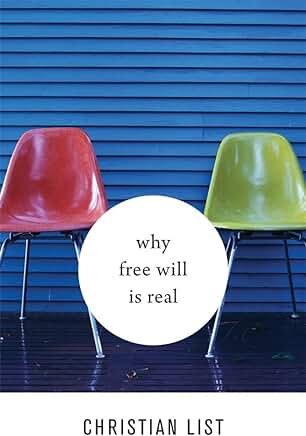
List offers a robust defense of free will against deterministic and reductionist challenges from neuroscience, psychology, and philosophy. He argues for a compatibilist understanding: free will is real and scientifically viable when properly understood. He posits that free will should be considered at the level of persons and their capacities for reasoning, decision-making, and agency, rather than being dismissed due to the deterministic nature of physical processes at a microscopic level. By distinguishing between different levels of description — physical, psychological, rational — List makes a case for the compatibility of free will with a scientifically informed view of the world.
While both our works defend the reality and significance of free will, they do so from different angles. My book bridges the gap between determinism and the lived experience of free will, focusing on how practical free will operates within the constraints of deterministic physical laws. List engages directly with — and counters — the arguments of free will skeptics, providing a philosophical framework that reaffirms free will's coherence and compatibility with a scientific worldview. Together, The Science of Free Will and Why Free Will Is Real challenge deterministic and reductionist narratives by showcasing the complexity of human agency and the robustness of free will as a concept grounded in both philosophical reasoning and scientific insights.
Freely Determined — Kennon M. Sheldon
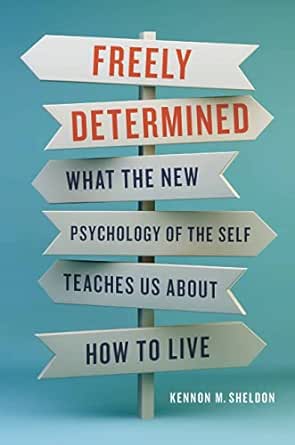
Sheldon's work dives into the psychological aspects of self-determination and autonomy, exploring how our understanding of the self influences our perception of free will and our ability to live fulfilling lives. By integrating findings from psychology, he offers insights into how individuals can navigate life with a sense of agency and purpose despite the constraints imposed by both internal and external factors. He draws on the latest psychological research to explore the conditions under which people feel most free, aiming to empower readers with strategies for enhancing their sense of autonomy and control.
While both our works engage with free will, they do so from different disciplinary perspectives. My book bridges the gap between the deterministic nature of the physical world and the subjective experience of free will. Sheldon delves into the psychological underpinnings of autonomy, exploring how a deeper understanding of the self can enhance our sense of free will and lead to a more fulfilling life. Together they offer complementary perspectives — physics, philosophy, and psychology combined — on the same question.
Free Will: A Very Short Introduction — Thomas Pink
Pink provides a concise yet comprehensive overview of the philosophical debate surrounding free will. He explores various philosophical arguments and theories that have shaped the discourse on free will throughout history, examining the implications for our understanding of moral responsibility, autonomy, and the nature of human action. The book serves as an accessible entry point for readers new to the topic, offering clear explanations of complex ideas and introducing key figures and arguments in the philosophy of free will.
Pink's analysis is rooted in philosophy — ethics, metaphysics, and the relationship between free will and determinism. The Science of Free Will is more interdisciplinary, drawing on physics, neuroscience, and philosophy to argue that a practical form of free will exists within a deterministic framework. Pink's book provides a solid foundation in the philosophical aspects; mine seeks to bridge the gap between determinism and the subjective experience of making choices. Read together, they offer a multidimensional view: philosophical context plus the scientific developments that are reshaping the question.
Determinism and Free Will — Scardigli, 't Hooft, et al.
This volume — featuring Nobel-Prize-winning physicist Gerard 't Hooft alongside other contributors — is a multidisciplinary exploration of the free-will-vs-determinism debate. It gathers insights from physics, philosophy, and theology to offer a comprehensive understanding of the interplay between predetermined universal laws and the concept of human freedom. The authors examine how advancements in physics, particularly in quantum mechanics and theories of the universe, influence our philosophical and theological interpretations of free will, seeking to reconcile seemingly opposing views by considering new scientific discoveries.
This work contrasts with my approach in The Science of Free Will, where I advocate for the coexistence of determinism with a form of practical free will rooted in the unpredictability and complexity of human decisions. Determinism and Free Will delves deeper into the theoretical underpinnings — the physics, the philosophy, the theology — while my book emphasizes the practical aspects of free will within a deterministic framework. They are complementary: together they cover both the theoretical foundations and the lived experience.
Free Agents: How Evolution Gave Us Free Will — Kevin J. Mitchell
Mitchell takes a biologically rooted stance, exploring how the evolution of the human brain has endowed us with a form of free will. He argues that our capacity for free will emerges from the complexity of our neural networks, shaped over millennia by evolutionary processes — free will is not a mystical force but an evolved capability that allows us to act as autonomous agents in the world. His work is deeply grounded in neuroscience and evolutionary biology, presenting free will as an evolved trait that enhances our ability to navigate complex social environments.
I take a broader, more interdisciplinary approach. I acknowledge the deterministic nature of the universe, particularly through the lens of quantum mechanics, but argue that the unpredictability and complexity of human actions — rooted in computational irreducibility — allow for a practical form of free will. Even though our actions are theoretically determined by the laws of physics, in practice they are unpredictable enough to be considered free. Mitchell views free will as an evolved trait arising from neural architecture; I explore how that complexity, viewed through the lens of physics and computation, allows for a practical experience of free will even in a deterministic universe. We agree that free will exists in some form. We differ on the origin and the nature of it.
Free Will and Determinism: A Dialogue — Clifford Williams
Williams's classic is a philosophical dialogue that explores the arguments for and against free will in the context of determinism. He presents the debate in a conversational, Socratic format — characters with different viewpoints engage in a thoughtful, accessible discussion. The format makes complex ideas approachable and invites readers to engage as if they were part of the conversation.
The Science of Free Will is more scientific and less focused on traditional philosophical debate. I bridge concepts from quantum physics, computation, and real-world phenomena like traffic patterns to argue that while free will may be an illusion from a theoretical standpoint, it manifests in practice due to the unpredictability of complex systems. Williams gives readers a deep dive into the philosophical arguments; my book provides an interdisciplinary exploration that incorporates scientific insights. Both works contribute to the conversation — Williams through philosophical dialogue, me through scientific analysis.